








Contributors: Amit Gini, Tom Saar, Liora Ziv
Introduction
Kicking off today, the 2026 FIFA World Cup is expected to be one of the largest and most digitally connected sporting events ever held, spanning three host nations, 16 cities, and attracting billions of viewers worldwide. While cybercriminals have already begun exploiting tournament-related interest through phishing campaigns, fraudulent ticket sales, and social media scams, the broader threat landscape extends far beyond financial fraud.
The tournament is taking place against a backdrop of heightened geopolitical tensions, including the ongoing conflict involving Iran and the United States, continued Russia-West hostilities, and increasing hacktivist activity targeting high-profile international events. Combined with the large number of participating organizations, temporary infrastructure deployments, and unprecedented global visibility, these conditions create an attractive environment for cybercriminals, hacktivists, and state-aligned actors alike.
Why the World Cup Is an Attractive Target
Major sporting events create a rare concentration of potential victims, digital infrastructure, financial transactions, and media attention. Unlike traditional corporate targets, the World Cup brings together governments, sponsors, broadcasters, transportation providers, hospitality organizations, telecommunications companies, payment platforms, and millions of fans within a single ecosystem.
For threat actors, this gathering of targets presents multiple opportunities to monetize stolen data, conduct fraud campaigns, disrupt services, collect intelligence, or amplify political messaging.
Organizations likely to attract threat activity include:
- Government delegations and diplomatic personnel, who may be targeted through espionage-focused phishing campaigns and credential theft operations.
- Transportation and travel providers, where service disruptions could immediately affect thousands of visitors.
- Telecommunications providers, which support event operations, media coverage, and communications infrastructure.
- Sponsors and commercial partners, whose visibility makes them attractive targets for brand impersonation and fraud campaigns.
- Broadcasters and media organizations, where disruptions can generate significant publicity and operational impact.
The rapid deployment of temporary infrastructure, customer-facing services, and third-party integrations may further expand the attack surface available to adversaries throughout the tournament lifecycle.
Early Signs of Threat Activity
Months before the tournament’s scheduled start, threat actors had already begun preparing infrastructure and campaigns designed to capitalize on World Cup-related interest. A significant increase in FIFA-themed domain registrations has been observed ahead of the tournament. Many of these domains reference ticket sales, host cities, hospitality packages, travel services, and official tournament branding. While many registrations support legitimate business activities, numerous domains display characteristics commonly associated with phishing, fraud, and brand impersonation campaigns.
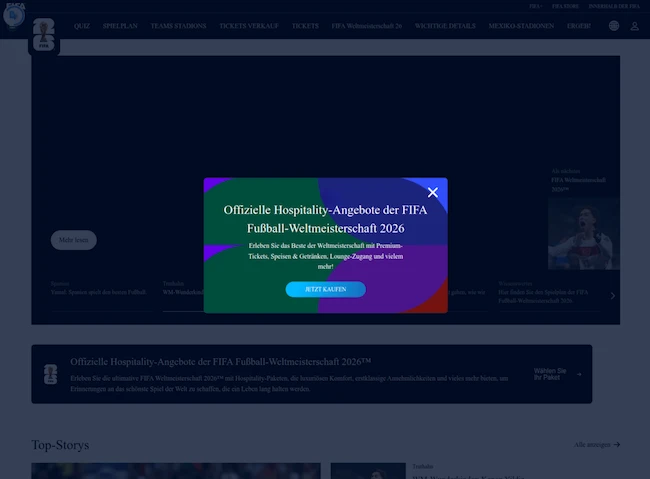
Figure: fifaticket2026vip[.]com phishing website screenshot (Source: Intel 471)
At the same time, football-themed scam campaigns have been observed across email and social media platforms. These campaigns commonly leverage themes associated with high-demand tournament services and products, including:
- Discounted match tickets advertised as limited-time offers.
- VIP hospitality packages impersonating official providers or event partners.
- Travel and accommodation deals targeting international visitors.
- Streaming and viewing services aimed at fans seeking tournament coverage.
- Tournament merchandise and giveaways used to collect payment details or personal information.
In many cases, victims are redirected to cloned websites designed to harvest credentials, collect payment information, or facilitate financial fraud. The increasing use of professionally designed websites, convincing branding, and AI-generated content has made these campaigns significantly more difficult to distinguish from legitimate communications.
Threat Actors and Threat Activity
Financially Motivated Cybercriminals
Financially motivated cybercriminals are expected to represent the most active threat throughout the tournament lifecycle. Similar activity has been observed during previous World Cups, Olympic Games, and other major international events, where attackers exploited public excitement and high transaction volumes to conduct fraud campaigns.
Rather than relying on technical vulnerabilities, many of these operations are expected to focus on social engineering and trust abuse. By leveraging tournament branding, sponsor names, host city references, and time-sensitive offers, attackers can create highly convincing lures that encourage users to disclose credentials or payment information.
Common objectives include:
- Account takeover and credential theft
- Payment card fraud
- Business Email Compromise (BEC)
- Financial scams targeting fans and travelers
- Resale or monetization of stolen personal information
Hacktivist and State-Aligned Actors
The current geopolitical environment increases the likelihood of cyber activity extending beyond financially motivated fraud. High-profile international events have historically attracted hacktivist groups seeking visibility, as well as state-aligned actors pursuing intelligence collection or influence objectives.
The ongoing conflict involving Iran and the United States has contributed to elevated activity from pro-Iranian groups such as Handala and CyberAv3ngers, both of which have demonstrated a willingness to target high-profile organizations and critical infrastructure. Similarly, Russia-aligned actors and affiliated influence operations have historically leveraged major international events to amplify political narratives, conduct espionage, or generate media attention through disruptive cyber activity.
Potential attack objectives may include:
- Distributed denial-of-service (DDoS) attacks against public-facing services.
- Website defacements intended to promote political or ideological messaging.
- Data leak operations targeting sponsors, commercial partners, or government entities.
- Influence and disinformation campaigns leveraging social media platforms.
- Intelligence collection activities targeting diplomatic personnel and government representatives attending the event.
While large-scale destructive attacks remain less likely than phishing or fraud campaigns, even temporary disruptions affecting transportation systems, telecommunications providers, broadcasters, or hospitality services could generate significant operational and reputational consequences.
Opportunistic Ransomware Activity
The concentration of high-profile organizations, time-sensitive operations, and public visibility may also attract ransomware affiliates seeking to maximize extortion pressure.
Groups such as Qilin, DragonForce, Akira, and Play have consistently targeted organizations where downtime creates immediate business disruption. Organizations involved in transportation, hospitality, ticketing, payment processing, and broadcasting may be particularly attractive targets due to their reliance on continuous service availability during the tournament period.
Risks to Organizations
The threat extends beyond direct attacks against event organizers. Organizations throughout the broader World Cup ecosystem may become targets simply because of their association with the tournament.
Sponsors, broadcasters, airlines, hospitality providers, payment processors, and technology vendors may all experience increased levels of phishing activity, brand impersonation, and attempted account compromise. At the same time, third-party suppliers and contractors may introduce additional attack paths that adversaries can exploit.
Key risk areas include:
- Business Email Compromise (BEC) targeting financial transactions and vendor communications.
- Third-party account compromise affecting suppliers, contractors, and service providers.
- Credential theft targeting employees supporting tournament-related operations.
- Cloud and SaaS account abuse following successful phishing campaigns.
- Brand abuse and customer-targeted fraud leveraging World Cup-related themes.
- Supply chain compromises affecting organizations connected to the broader event ecosystem.
As preparations accelerate and new services are deployed, the introduction of temporary infrastructure, customer-facing applications, and third-party integrations may further expand the attack surface available to adversaries.
Recommendations
Organizations involved in any aspect of the World Cup ecosystem should consider implementing enhanced monitoring and defensive measures ahead of the tournament.
Monitor for Brand Impersonation and Fraudulent Domains
The increase in World Cup-related domain registrations is likely to create opportunities for phishing and brand abuse. Organizations should monitor for newly registered domains referencing their brand, sponsorship activities, products, or services and establish procedures for rapid investigation and takedown where appropriate.
Enhance Detection of Tournament-Themed Phishing Campaigns
World Cup-related themes are expected to feature heavily in phishing activity throughout 2026. Security teams should review detection content and monitor for FIFA-related keywords, ticketing lures, hospitality offers, travel promotions, and streaming-related themes appearing in email, web, and messaging telemetry.
Review Third-Party and Supplier Access
The tournament relies heavily on contractors, event partners, marketing agencies, and temporary service providers. Organizations should validate privileged access, review supplier accounts, and ensure third-party activity is appropriately monitored before the event begins.
Increase Visibility Into Cloud and SaaS Authentication Activity
Many modern intrusions begin with compromised credentials rather than exploitation of vulnerabilities. Monitoring for unusual authentication activity, impossible-travel events, MFA fatigue attacks, and suspicious OAuth application approvals can help identify account compromise before it escalates.
Prepare for Elevated DDoS Activity
Hacktivist groups frequently target high-profile events to maximize visibility and media attention. Organizations supporting public-facing services should review DDoS mitigation capabilities, validate response procedures with service providers, and ensure critical systems can withstand increased traffic volumes and attack activity.
Outlook
The cyber threat landscape surrounding the 2026 FIFA World Cup has already began taking shape months before the first match begins. While phishing campaigns, fraudulent domains, and ticket scams are likely to remain the most prevalent threats, organizations should also consider the broader risks posed by hacktivist groups, ransomware operators, supply chain compromises, and geopolitically motivated cyber activity.
As the tournament approaches, further increases in phishing infrastructure, brand impersonation activity, social engineering campaigns, and malicious domain registrations should be expected. Organizations involved in any aspect of the World Cup ecosystem should therefore treat the tournament as a distinct threat scenario requiring dedicated monitoring, proactive security planning, and heightened situational awareness.
