









Contributors: Niranjan Jayanand, Prajeesh Sureshkumar, Deepak Nayak, Archana Manoharan, Kalyani Kalva, Vishak Unnikrishnan Kavitha
Executive Summary
CyberProof Threat Researchers have been monitoring multiple infostealer campaigns in which code‑signing certificates are revoked shortly after reporting, Authenticode stuffing is used to impersonate ConnectWise ScreenConnect, and threat actors continuously rotate tools and infrastructure to evade detection.
Over the past eight months, CyberProof Threat Hunters and MDR Analysts have observed recurring waves of malicious installers impersonating legitimate productivity utilities and containing backdoor capabilities, likely associated with EvilAI. Researchers previously reported that EvilAI impersonates productivity and AI‑enhanced tools, featuring professional‑looking interfaces and valid digital signatures that make the malware difficult for both end users and security products to distinguish from genuine software. Some researchers track this activity under the name TemperedChef.
The primary infection vectors are confirmed to be SEO poisoning and newly registered domains. Telemetry shows that the Manufacturing sector has been most heavily impacted, followed by the Financial sector. Our analysis indicates that the campaign does not currently display industry‑specific or regional targeting, and the operators’ motivation remains unknown. Approximately 5–7% of CyberProof‑handled incidents between June and September 2025 were linked to these campaigns.
CyberProof researchers also confirmed that the backdoor component is capable of extracting DPAPI secrets and provides full command‑and‑control (C2) functionality, including arbitrary command execution, file upload/download, and data exfiltration. In many cases, the malware deploys second‑stage payloads and establishes persistence using ASEP registry run keys and .lnk startup files.
Several EDR solutions demonstrated delayed detections across these long-running campaigns. CyberProof analysts worked continuously to notify impacted customers of EDR gaps and isolate compromised hosts, working in coordination with the Advanced Threat Hunting team.
Technical Details
The sections below highlight the key characteristics of the various backdoor campaigns observed, which share significant overlap across their process execution chains.
Campaign 1: AppSuite PDF Editor
Between mid‑May and late August, CyberProof MDR analysts observed several organizations impacted by this campaign, also tracked by other researchers as TemperedChef. The infection typically begins when a user unknowingly clicks a malicious URL hosting a trojanized installer with embedded backdoor functionality.
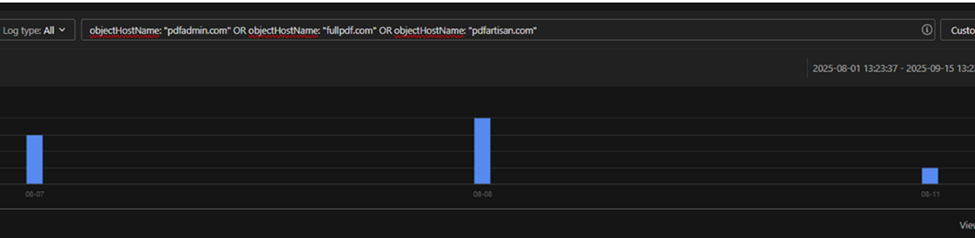
Fig. 1: Three malicious domains related to this cluster in TrendMicro XDR
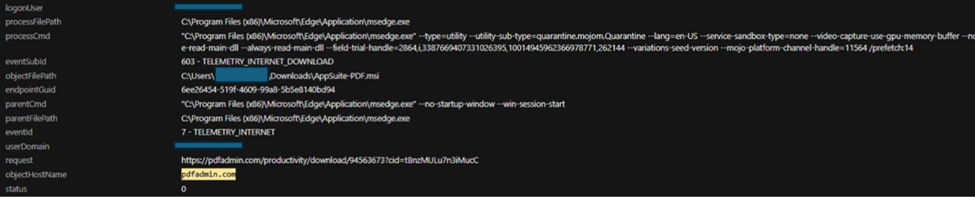
Fig. 2: An infected user downloading the installer from pdfadmin.com
Observed Malicious file: https://vault.appsuites.ai/AppSuites-PDF-1.0.28.exe
Sample hash: f28a0cf84e09873b77f9e2e5a800fd67
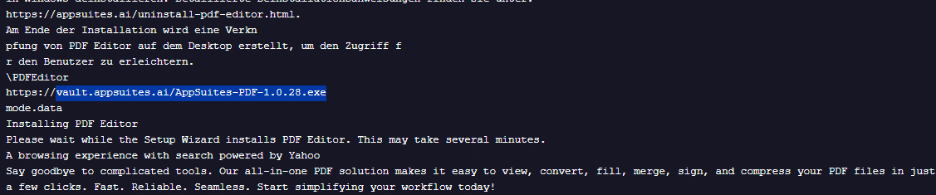
Fig. 3: Malicious file
Further analysis has identified another url that serves malicious AppSuites PDF installer.
Campaign 2: OneStart PDF Editor Campaign
Researchers identified the OneStart PDF Editor being used as a decoy payload beginning mid‑February 2025. By August 2025, additional findings confirmed that OneStart Browser was responsible for installing additional PUPs and establishing persistence.
Persistence mechanisms include:
- Registry AutoRun keys
- Scheduled tasks triggered at boot/login
- Execution of
node.exe, which runs a<GUID>.jsfile fromAppData\Local\Temp - Network communications to C2 domain
mka3e8[.]com
Around August 16, 2025 the C2 server triggered an mshta.exe process that downloaded manualfinderapp.msi from portal[.]manualfinder[.]com.
Another observed malicious URL: https://pdf.onestart.ai/en/pdfeditor
Sample hash: 5e1689ca04778ff0c5764abc50b023bd71b9ab7841a40f425c5fee4b798f8e11
Campaign 3: ManualFinder Campaign
Outside researchers have recently observed a file named “ManualFinder.msi” getting dropped onto a system from a JavaScript persistence, showing significant overlap with the OneStart campaign. The research includes the following:
- Parent Process:
c:\users\redacted_user\appdata\local\programs\node\node.exe
- Parent Command Line:
"node.exe" "C:\Users\redacted_user\AppData\Local\TEMP\[guid looking-number]of.js"
- Process:
C:\Windows\System32\cmd.exe
- Process Command Line:
cmd.exe /d /s /c "msiexec /qn /i "C:\Users\redacted_user\AppData\Local\TEMP\ManualFinder-v2.0.196.msi""
The MSI file was signed by GLINT SOFTWARE SDN. BHD., whose certificate has since been revoked.
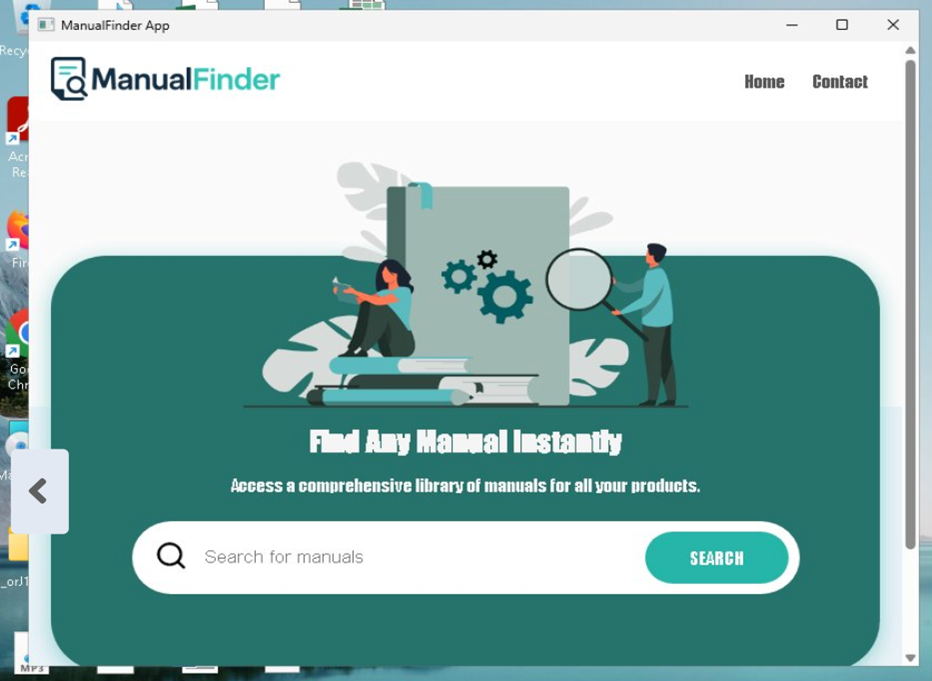
Fig. 4: Webpage serving the installer [http[ : ] //lib.manualfinder.app/ManualFinder-v2.0.196.msi ]
High level process kill chain seen in this campaign: node.exe → cmd.exe → msiexec.exe → ManualFinder-v2.0.196.msi → ManualFinderApp.exe.
Below is an example of <GUID>.js naming pattern, spawned by node.exe:
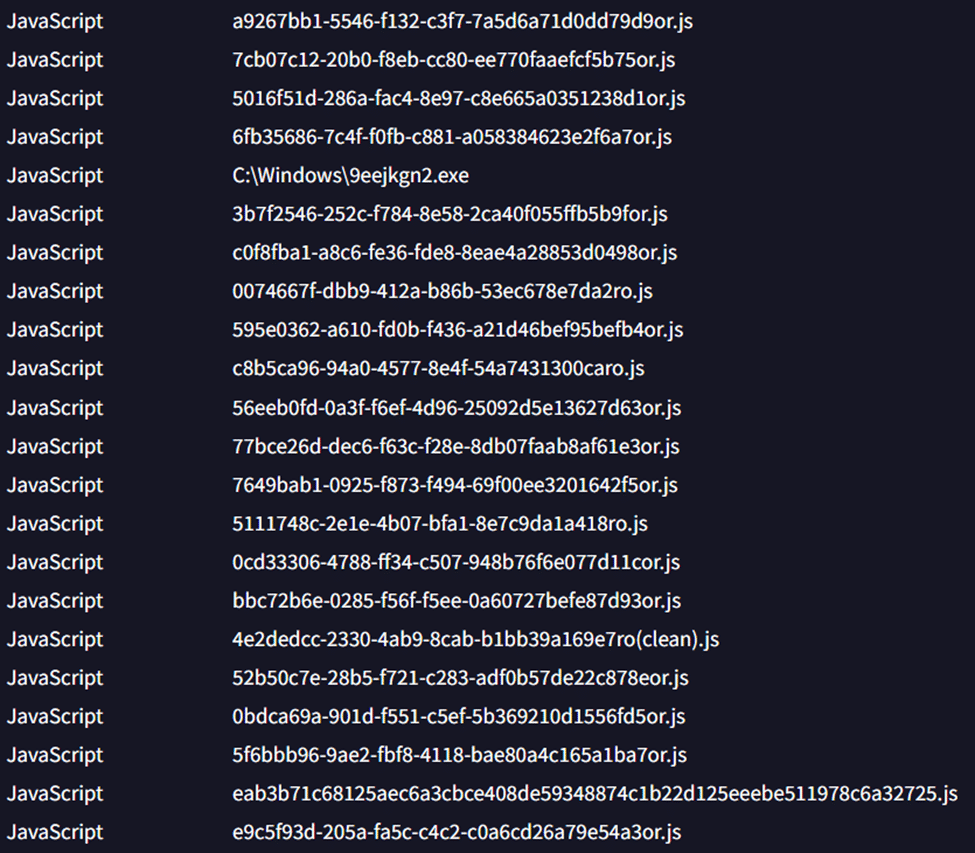
Fig. 5: <GUID>.js naming pattern seen from in this cluster when checked in VirusTotal
Below image shows late alert by SentinelOne EDR (source – link):
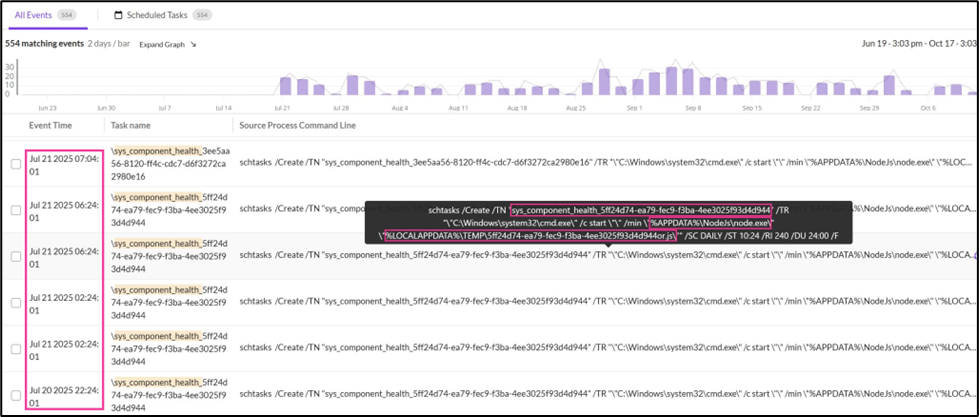
Fig. 6: Late detection seen in SentinelOne
Campaign 4: ManualReaderPro Campaign
This cluster involves installers branded as ManualReaderPro. During execution, the sample launches a JavaScript file using node.exe, then initiates a remote connection to: api[.]cjby76nlcynrc4jvrb[.]com
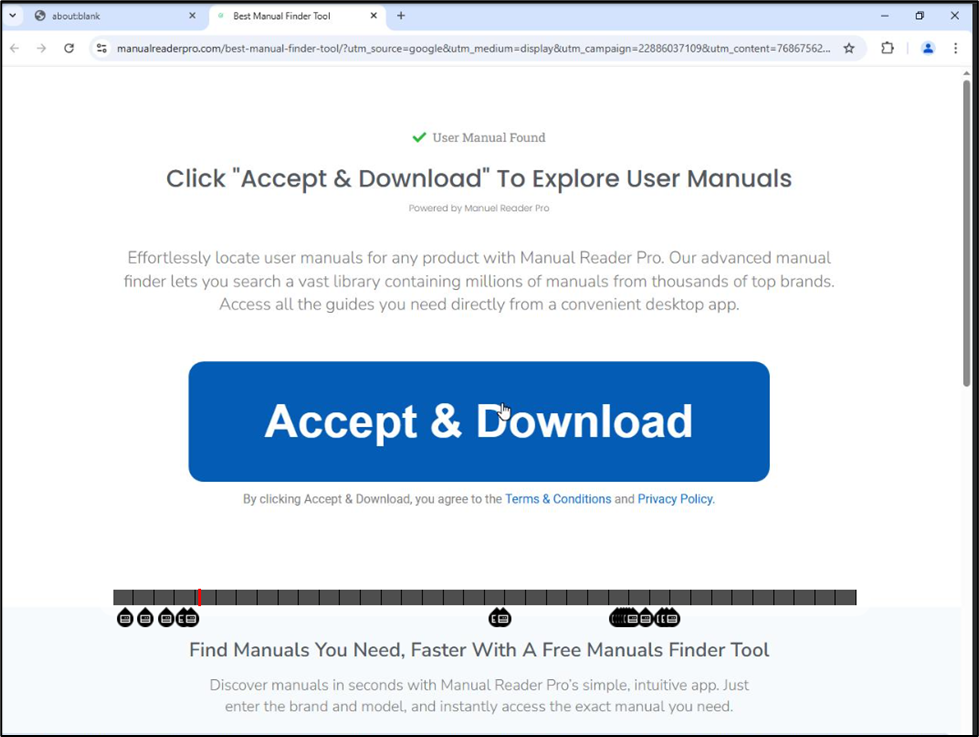
Fig. 7: ManualReaderPro website serving installer
Microsoft Defender triggered a delayed detection at the persistence stage via a scheduled task, flagging: Trojan:JS/Obfus!MSR
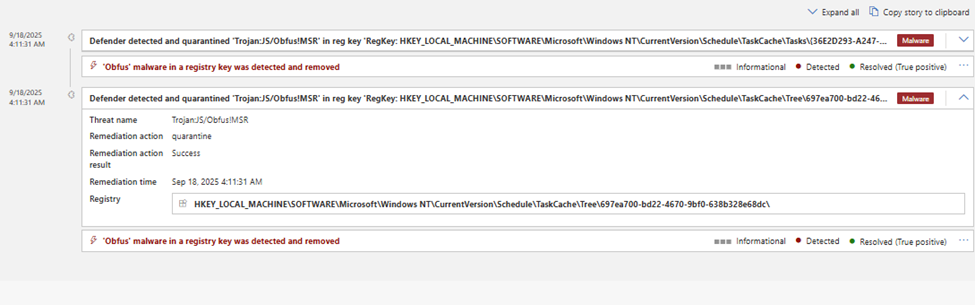
Fig. 8: Late Defender alert
Campaign 5: Crystal PDF Campaign
In early September 2025, CyberProof researchers identified another wave of digitally signed PDF editors masquerading as legitimate installers. These samples were signed with certificates that were later revoked.
Malicious domains included:
ramiort[.]com/Crycrystalpdf[.]comnegmari[.]com/Crystrongdwn[.]com/abg
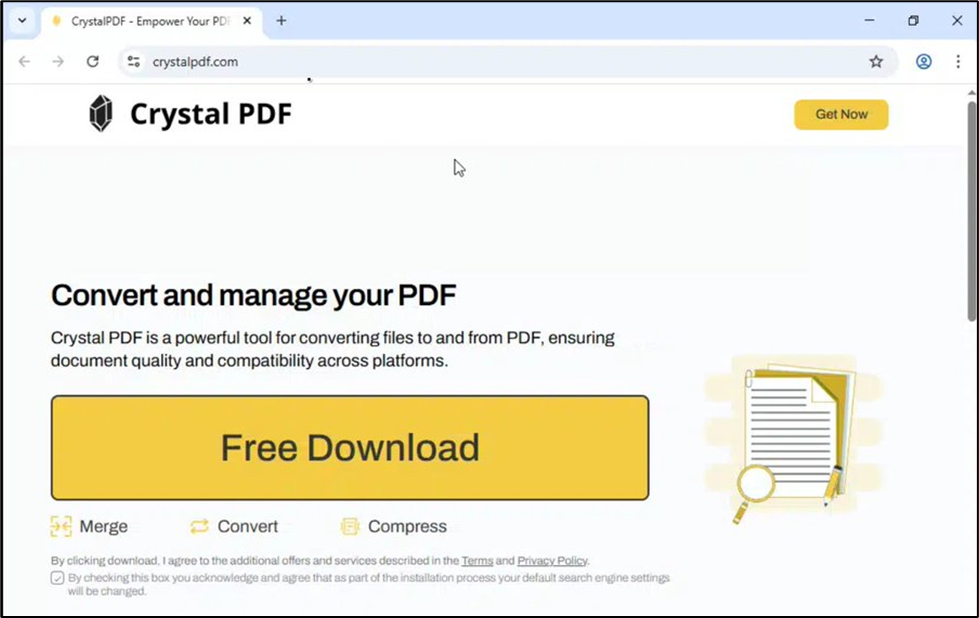
Fig. 9: Newly created website related to Crystal PDF
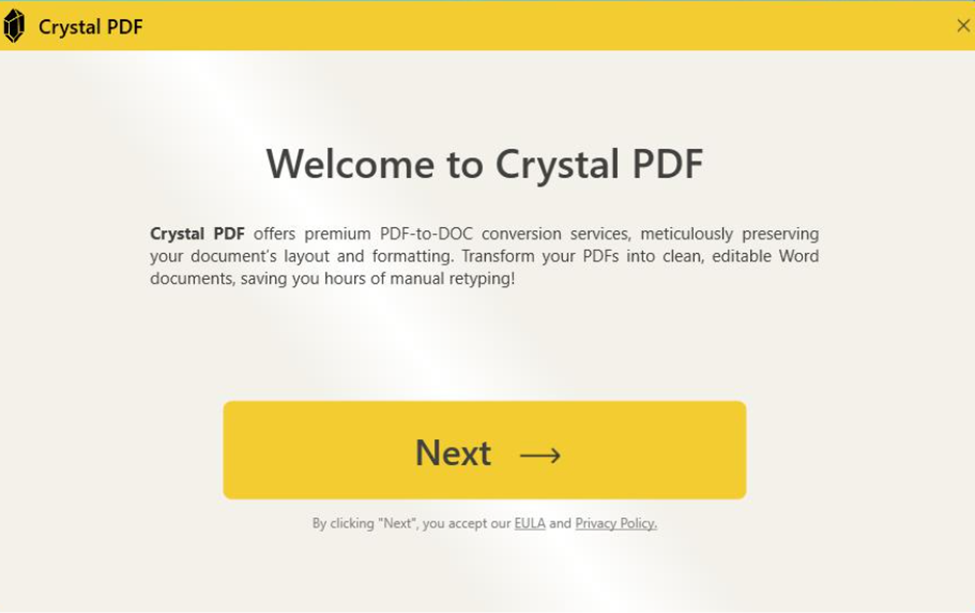
Fig. 10: Another view of the Crystal PDF tool used to fool unsuspecting users
The samples identified under this cluster or campaign were signed with the below mentioned. The certificate was then revoked by the time researchers completed analysis.
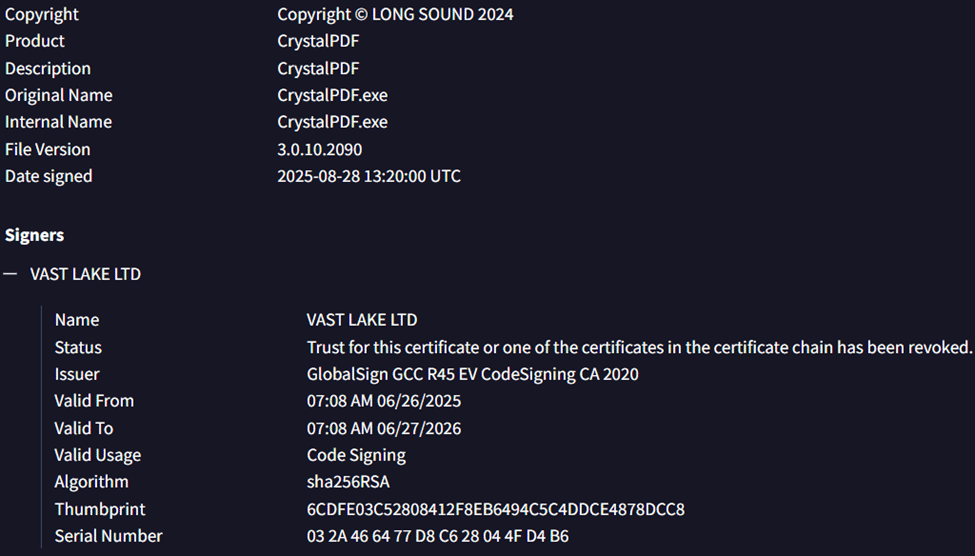
Fig. 11: Digital certificate information from a CrystalPDF sample
Malicious Domains
Malicious domains used as part of the campaign include:
- AppSuite cluster
- PDFOneStart cluster
- PDF Editor UI
- OneStart UI

Fig. 12: Webpage in AppSuite cluster
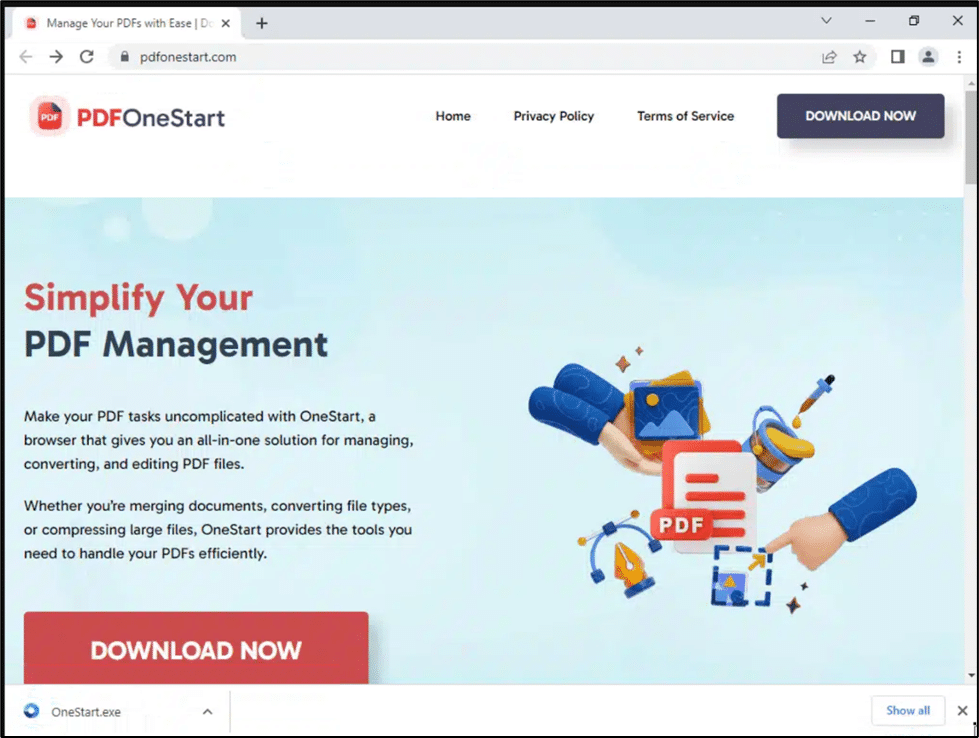
Fig. 13: Webpage in PDFOneStart cluster
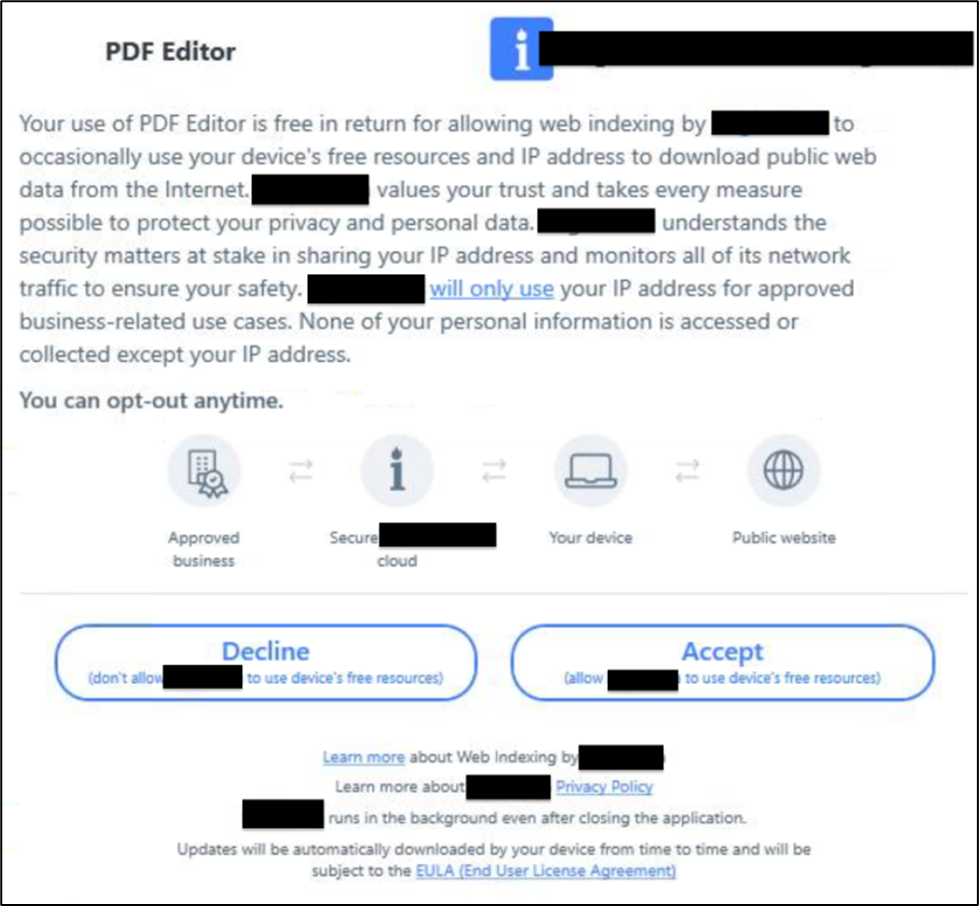
Fig. 14: Webpage in PDF Editor cluster
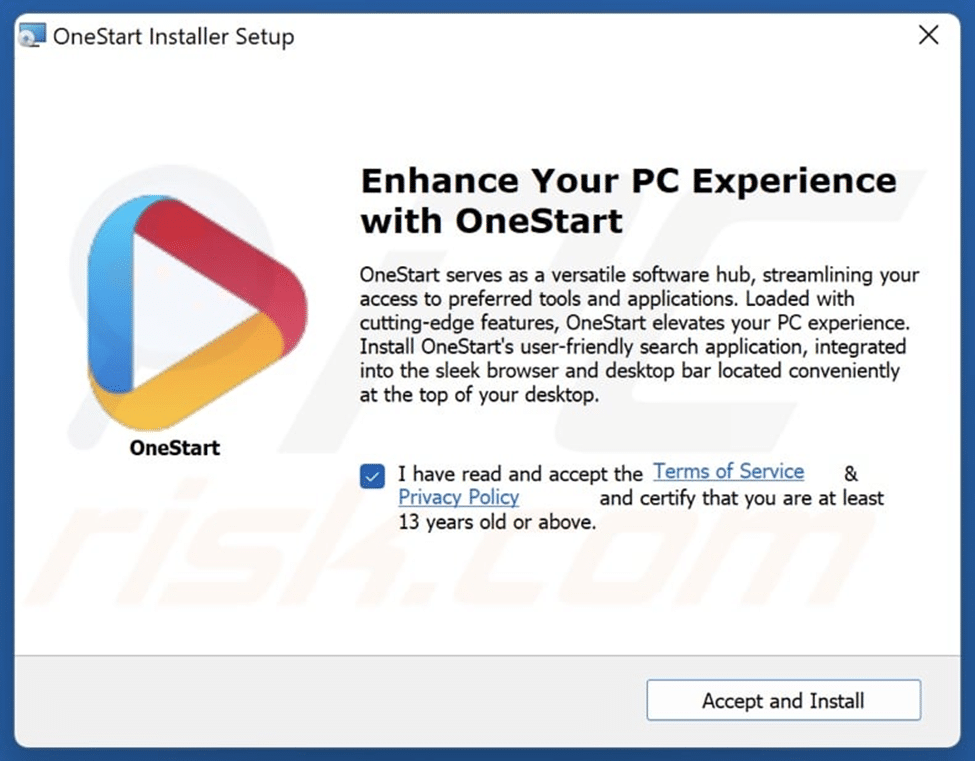
Fig. 15: Webpage in OneStart Cluster
KQL Hunting Query
(source: FREAKJAM on Reddit)
DeviceNetworkEvents | where Timestamp > ago(30d)
| where ActionType == "ConnectionSuccess"
| where InitiatingProcessFileName =~ "node.exe"
| where InitiatingProcessCommandLine matches regex @".*\\AppData\\Local\\TEMP\\[a-f0-9]{8}-[a-f0-9]{4}-[a-f0-9]{4}-[a-f0-9]{4}-[a-f0-9]{12}.*\.js"
| extend Username = extract(@"\\Users\\([^\\]+)\\", 1, InitiatingProcessCommandLine)
| summarize
FirstSeen = min(Timestamp),
LastSeen = max(Timestamp),
TotalConnections = count(),
UniqueRemoteIPs = dcount(RemoteIP),
UniqueRemotePorts = dcount(RemotePort),
Usernames = make_set(Username),
RemoteIPs = make_set(RemoteIP, 5),
RemotePorts = make_set(RemotePort, 5),
RemoteUrls = make_set(RemoteUrl, 5),
SampleCommandLines = make_set(InitiatingProcessCommandLine, 3)
by DeviceName
| sort by TotalConnections desc;
Indicators of Compromise
CrystalPDF Campaign:
- 0a1fd8b4ad7d3d00dd8e48c74ddc0ae9
- c9b3703a5a2417129bd75da8745d813f
- d7e6cf1104ddd987045a4334a78378d2
- 5c5fa3827b0648989d1f734f4f5b1437
- 3a12246519d58778025946f1d74a7dd6
- 099b45d8f53fda896d2d847d4aece489
- 8e8656355a5a0ff5683d1ccf6b46c9c3
- crystalpdf(dot)com
- negmari(dot)com/Cry
- strongdwn(dot)com/abg
- ramiort(dot)com/Cry
- Onestart.ai
- d0838244e7ebd0b4bd7d7486745346af6b9b3509e9a79b2526dcfea9d83c6b74
- mka3e8[.]com
- y2iax5[.]com
- portal[.]manualfinder[.]com
- Manualfinderapp.msi
PDFSuite Campaign:
- pdfadmin[.]com
- Pdfmeta[.]com
- Pdfartisan[.]com
- Pdfreplace[.]com
- fullpdf[.]com
- Appsuites[.]ai
- 4e8bd351aa8bc45d94c5f60086b5dad4
- e7311867d3a9c177b7ec81cf92f09c52
- 81bfa3fbe14bd30952dad17ce0daeeaa
- 98fa065c8d40d3b4f82e6b3f303aa4b3
- B66d89ee13a48e9c8d4a7aa2e3e1cb2b79f0b95e4f74f4184b85628656281588
- 6c36fd8afb93e7c9ae62d5962cb2c6bf
- f6bc17c61524935637887617e5752f88
- de792af1f053f582bb6fe971bcb16a20
- 08e42764571804aa3e27530b03dd5d99
- 365160a0259aa7f46bf5395ff5c27243
- 71a48137d84fee3bcbe885ab7f84c004
- ea4e4113b16411a9d2a5cc1e61586609
- 186996c413c8574c3b380043687ea677
- 532507b853dc28988915fd8e4327f0e8
- 4a32a922cd35839b2227e269e3953f53
- 15b187d465e8d02d715b69b8203e01bd
- aed64325de919c00588ba99cabc834d4
ManualReaderPro Campaign:
- abcd8cd8dce84186c04e3b83c93ee4bd
- 296690fcb018a76cbfd5c9a16123a575
- a340147e26151ef380b74c1c59d8086f
- 6b50bf28f3cf6d138089c6954085a076
- 287de08218ea23f7e795da3caf525bb6
- 71bddf977d92f3ad92ec678b0fa226da
- a603cf81719c036c35419aebf38f6952
- 07cfb523c055361030b806c2d3c9e41a
- 1f6137470ddf89659b1816eed26f3c46
- 3dbd10478d2d2b21d11c0e392e3cb751
- c35cb8e4ce9ae9e11509f241d40e99bf
- f6e7b560735df83efa3f10982af991fc
ManualFinder Campaign:
- 62e43638548bbe4909eaf8408d8b5686
- a5d7966e70b62f95ec2e3d18f5f8ab2a
- 92dbeca8f1d5710a3e180090bed44318
- 2d633863e4fe1c6223aebb67c992f478
- 1efaffcd54fd2df44ab55023154bec9b
- 4b561a4b6e430d9d8bc89058bb60ed43
OneStart PDF Campaign:
- 7c57900a9ee5e8af100323ceb66f5e15
- e5b4f5922c8a1a1259847f5707438814
- c2522f0dcc7d511396cd89f5139db164
- 59ccf747e93dae15c5af5d037b763bfe
- 17b0a6ff85e3715fa43fa8b78acbef1a
- 10a3d72209c889add463ba382a2c5def
- 2233b56b43392b0a9a4242e6e89bcd94
- 390e9809611e640ff8f15fc5d4fb711d
- 0f3d699e108c546769d5154a13332dab
- b04309c2dc6f6aa5d9caafd91a0e7ebf
- 5d5d019da21487b59f6ce4ab745d4f08
- c9e85b19c02828f4992c79f6de18e929
- 49f42fc87247db3d09baaee2dcc40273
- a6059a38bf4dcfd231e6a7dc508ebb40
- 0063eb128135844508bca784cede6207
- 88f220fa42e8214890f8a8f6a338a190
- 4ef5fe50c51728bab14761ae0983011b
- ec53c97d3d5e5a533a212070440073cd
- a99c9c45a26fa6cd2f25a94ae14e83bc
- 5c846698be10663d9c3bd755c18ad236
- 5031aab13b5a910673972b89f40855e4
- 11340d90a28496f3d410615bdd7b763e
- b2c1de6a86d5e896a54a21a421758670
- 49a075ba9c2067fa942e8447d88238d7
- c51de5f6311ac04d43eef52e8db3e61e
- b9dcd9da9b80d98798ccc352845d2a9d
- b9bf43a89b95a264ea434137652f0331
- bbb0deb9694b8f9de2309ae1c2de152e
- b8d2ba01f5b8c2dce60925c5c4523f97
- d72602a40437c71a02f72b159ac924b1
- 652ebea13847d6e422f7fd51c3bcae66
- 7ab778ef3e05b6cc862991fdc1f1c935
- ea61944963a7d863d346dad84bf302f6
- c5b163355dbace1734987116b7cd6d78
- 0d89b948d3748a22440e9fc2fdd1fde6
- d82f50b5fb015fa65a0a455d3af8a30b
- 73aa25ec608d576ddea7c1d04387d5a4
- 68ff4fafdc7f64877a443892c5f942f7
- 25b34222e021bffeae3ec852972b7b29
- 75494758823352c604627981bb9c3704
Malicious PDF Download Theme Domains:
- allpdflive.com
- apdft.com
- appsuites.ai
- businesspdf.com
- convertpdfplus.com
- easyonestartpdf.com
- easypdfbox.com
- fastonestartpdf.com
- fullpdf.com
- getonestart.co
- getonestartpdf.com
- getpdfonestart.com
- getsmartpdf.com
- gopdfhub.com
- gopdfmanuals.com
- itpdf.com
- justpdflab.com
- manualsbyonestart.com
- mypdfonestart.com
- onestartbrowser.com
- onestartpdfdirect.com
- pdf-central.com
- pdf-kiosk.com
- pdfadmin.com
- pdfappsuite.com
- pdfartisan.com
- pdfdoccentral.com
- pdfeditorplus.com
- pdfmeta.com
- pdfonestart.com
- pdfonestarthub.com
- pdfonestartlive.com
- pdfonestarttoday.com
- pdforsmartminds.com
- pdfreplace.com
- printwithonestart.com
- proonestarthub.com
- proonestartpdf.com
- quickfastpdf.com
- quickpdfmanuals.com
- smarteasypdf.com
- smartmanualspdf.com
- smartonestartpdf.com
- smartviewpdf.com
- thepdfbox.com
Recommendations
Threat Hunting and SecOps teams should:
- Review and block code-signing certificates associated with these campaigns.
- Investigate and remove scheduled tasks executing JavaScript via Node.js (node.exe).
- Ensure CTI feeds, antivirus engines, and EDR solutions are fully updated.
- Monitor for newly registered PDF‑themed domains used for SEO poisoning.
Conclusion
This long‑running campaign is expected to continue into late 2025 and early 2026, particularly as attackers exploit global holiday seasons and increased user activity to maximize SEO poisoning. User training remains critical, as adversaries repeatedly shift infrastructure, signed binaries, and lure themes to evade detection.
CyberProof continues to combine AI‑driven analytics with human expertise to rapidly detect and notify customers when EDR tools fail to trigger timely alerts, as demonstrated across the campaigns described above.
